
How to Cook Proper Sushi Rice: The Foundation of Great Sushi
Rice crop, washing, water ratios, sushi-zu, and the cutting technique that keeps every grain intact.
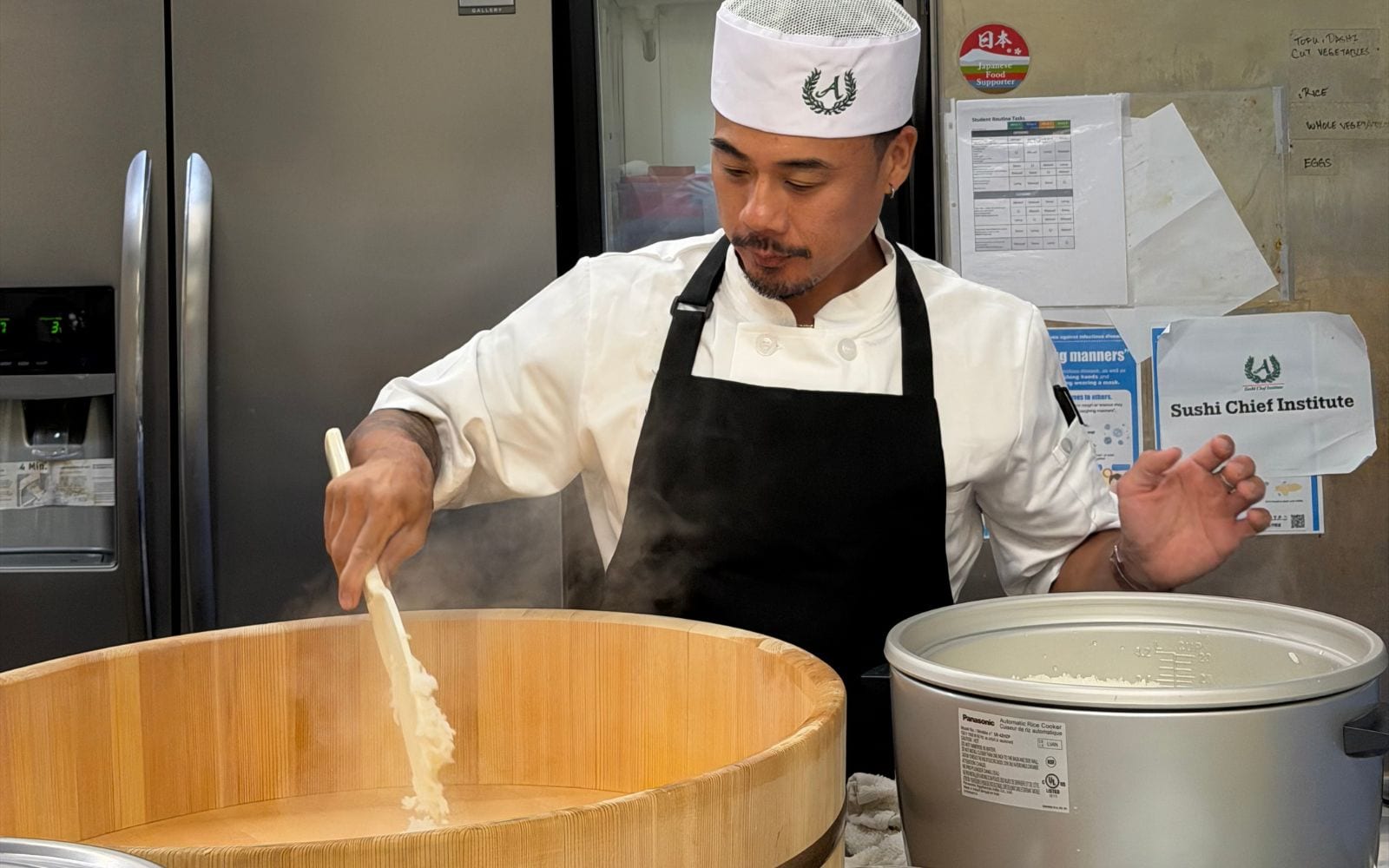
Great sushi starts with great rice. No matter how high-quality your fish is, poorly prepared sushi rice can ruin the entire experience. Proper sushi rice is about much more than simply adding water and pressing “cook.” You need to understand the rice crop, washing technique, drying time, water ratios, sushi-zu, and—most importantly—how you mix the finished rice.
Here is my method for preparing proper sushi rice.
1. Understand Your Rice Crop
One of the most important things to understand is when the rice was harvested.
Rice changes as it ages. New-crop rice, harvested more recently, naturally retains more moisture and therefore requires less cooking water. As the rice gets older—especially as you get closer to October and beyond—it tends to dry out and requires more water to cook properly.
This is why you shouldn’t always use the exact same water ratio throughout the year.
My rule of thumb:
- New crop: 10 cups rice → 11 cups water
- Older crop: 10 cups rice → 11.5 cups water
The goal is rice that is tender and moist while still maintaining its individual grains. You don’t want it mushy, wet, or overly sticky.
2. Wash the Rice Properly
Washing sushi rice is not just about cleaning it. You’re removing excess surface starch that can make the finished rice overly cloudy, gummy, and heavy.
Start by placing the rice in a bowl and washing it with clean water. Gently agitate the rice with your hands, then drain the water. Repeat the process until the water becomes significantly clearer and is no longer heavily cloudy.
Be gentle. You are cleaning the rice, not grinding it.
Proper washing gives you a much cleaner texture and allows the finished grains to separate properly.
3. Let the Rice Dry After Washing
This is a step many people skip, but it can make a big difference.
After washing, transfer the rice to a strainer and allow it to sit for approximately 15–20 minutes.
This allows excess surface water to drain and gives you a more consistent starting point before cooking.
It also helps with proper measurement. When you’re working with larger batches, consistency is everything. If the rice is holding different amounts of water every time you prepare it, your cooking results will change.
4. Add the Correct Amount of Water
Once your rice has been properly washed and rested, it’s time to cook.
For every 10 cups of sushi rice, use:
- 11 cups of water for newer rice
- 11.5 cups of water for older rice
Remember that the age of the rice matters. Don’t blindly follow one measurement year-round.
Once you understand how your rice behaves, you can adjust your water accordingly.
5. What Is Sushi-Zu?
Sushi-zu is Japanese seasoned sushi vinegar. It is what gives sushi rice its characteristic balance of acidity, sweetness, and salt.
A simple rule of thumb for making sushi-zu is:
- 7 parts rice vinegar
- 5 parts sugar
- 1.5 parts salt
Combine the ingredients and mix until the sugar and salt are completely dissolved.
For an additional layer of flavor, you can add a piece of kombu while making the sushi-zu. The kombu adds natural umami and gives the vinegar more depth.
The goal isn’t for the vinegar to overpower the rice. It should enhance the rice and complement whatever you put on top.
6. How Much Sushi-Zu?
For every 10 cups of cooked sushi rice, my general starting point is:
This is a guideline, not an absolute rule. Different rice varieties, crops, and personal styles can require slight adjustments.
Taste your rice and learn how the rice, vinegar, sugar, and salt work together.
7. Mixing the Rice: The Cutting Technique
Once the rice is cooked, transfer it into a Hangiri, the traditional wooden tub used for preparing sushi rice.
Pour your sushi-zu evenly over the rice.
Now comes one of the most important techniques: how you mix it.
Do not aggressively stir the rice.
Instead, use a cutting motion with your rice paddle. Slice through the rice and gently turn it over, allowing the sushi-zu to distribute evenly throughout the grains.
Think of it as cutting and folding rather than stirring.
Never smash the rice.
Smashing or aggressively mixing the rice releases more starch and can destroy the individual grains, leaving you with heavy, mushy sushi rice.
You want each grain to remain intact while being evenly seasoned.
8. The Goal
Proper sushi rice should be:
- Tender but not mushy
- Moist but not wet
- Slightly sticky but still have individual grains
- Properly seasoned with balanced acidity, sweetness, and salt
- Able to hold together when making sushi without becoming a ball of mush
The rice is the foundation of every piece of sushi. When you get the rice right, everything else has a better chance to shine.
Understand your crop. Wash it properly. Let it rest. Measure your water. Season it correctly. And mix it with respect.
That’s how you build proper sushi rice.
Enjoy!