
How to Build a Great Crudo: My Rule of Thumb
Sauce, protein, oil, vegetables & herbs, crunch — the five components behind every crudo I build.
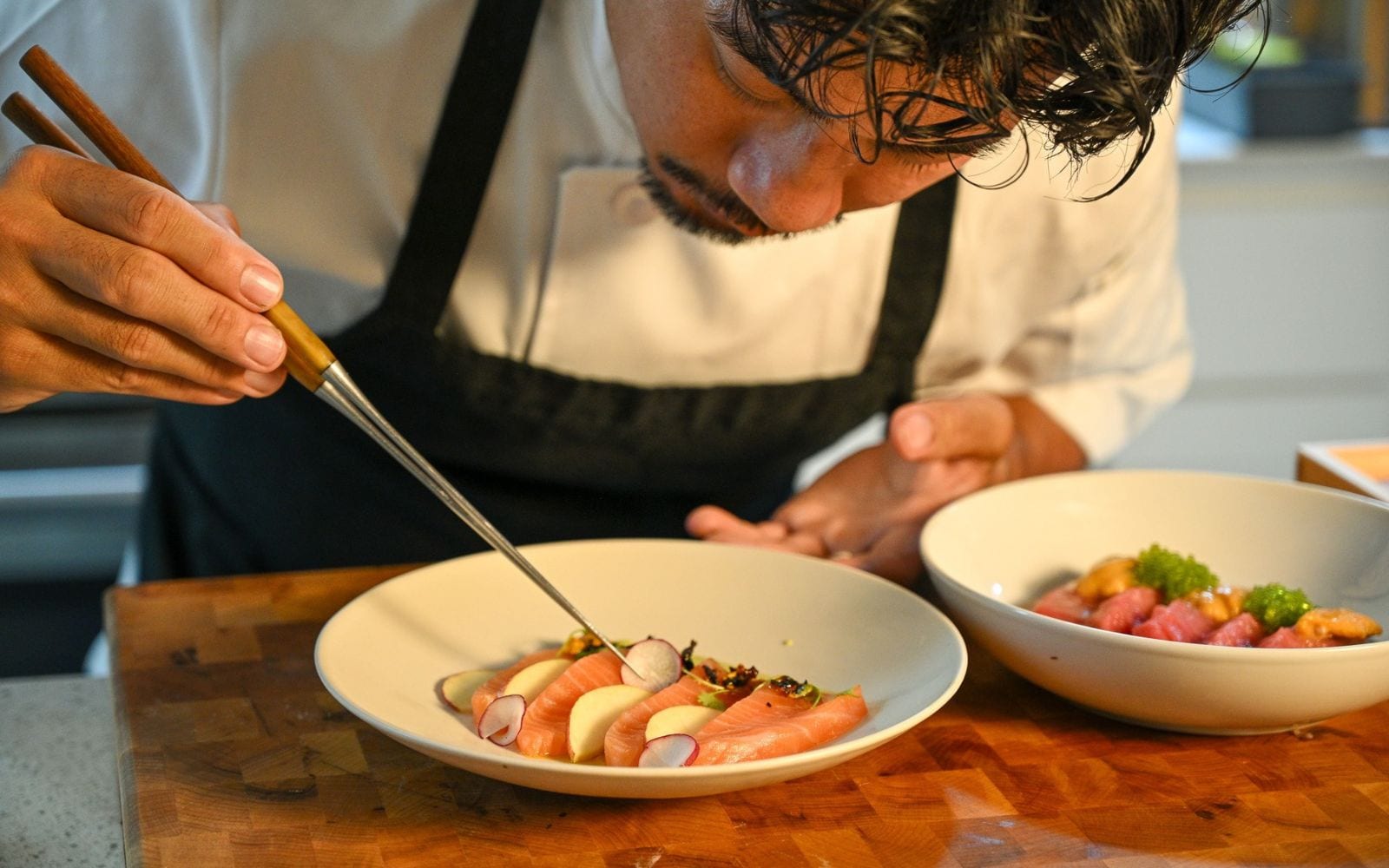
A great crudo doesn’t need to be complicated. In fact, some of the best crudo dishes are built around a few simple ingredients that work together to highlight the quality of the fish.
When I create a crudo, I like to think about five key elements:
Once you understand these five components, you can start creating your own combinations and develop a dish that feels balanced, vibrant, and completely your own.
1. Start With the Sauce
The sauce is the foundation of your crudo. This is where you can introduce acidity, sweetness, salt, spice, or umami.
Think about what your protein needs.
For example, citrus can brighten rich fish, while something with more umami can add depth to a delicate fish.
You can experiment with:
- Yuzu
- Lemon or lime
- Ponzu
- Rice vinegar
- Soy
- Miso
- Chili
- Fruit
- Herbs
- Dashi
The key is balance. You don’t want the sauce to completely cover the flavor of the fish.
2. Choose Your Protein
This is the star of the dish.
Use high-quality fish or seafood and let the ingredient speak for itself. Hamachi, kampachi, tuna, snapper, scallop, fluke, and many other seafood options can work beautifully for crudo.
Think about the natural characteristics of the protein:
Is it fatty? Lean? Delicate? Meaty? Sweet?
Once you understand the protein, you can build the rest of the dish around it.
3. Add Oil
Oil gives your crudo another layer of flavor and helps carry the other ingredients across your palate.
Extra-virgin olive oil is a classic choice, but don’t be afraid to experiment.
You can try:
- Olive oil
- Sesame oil
- Chili oil
- Herb oil
- Citrus-infused oil
- Shiso oil
Just remember: a little goes a long way.
You want the oil to complement the fish rather than make the dish feel heavy.
4. Add Vegetables & Herbs
This is where you can bring color, freshness, aroma, and texture to the plate.
Think beyond just using vegetables as decoration. Every ingredient should have a purpose.
Try things like:
- Shiso
- Green onion
- Chives
- Cilantro
- Microgreens
- Cucumber
- Radish
- Fennel
- Pickled vegetables
- Fresh fruit
This is also where you can have fun with seasonal ingredients.
A little acidity from a pickled vegetable or freshness from herbs can completely change the way the fish tastes.
5. Don’t Forget the Crunch
One of my favorite parts of building a crudo is adding something crunchy.
Texture creates contrast and keeps every bite interesting.
You can use:
- Fried shallots
- Crispy rice
- Toasted nuts
- Seeds
- Crispy quinoa
- Tempura flakes
- Puffed rice
- Fried herbs
The goal is to create contrast between the soft, delicate texture of the fish and something crisp or crunchy.
Build Your Balance
Once you have your five components, take a step back and ask yourself:
Does everything have a purpose?
You want the dish to have a balance of:
You don’t necessarily need every flavor to be strong. In fact, the best crudo often comes from keeping everything subtle and allowing the ingredients to work together.
Keep It Vibrant, Clean & Simple
A crudo should look as good as it tastes.
Think about color, negative space, portion size, and how you arrange the ingredients on the plate. Don’t overcrowd it.
A few beautiful slices of fish, a carefully balanced sauce, fresh herbs, a touch of oil, and one crunchy element can be more impressive than a plate covered with twenty different ingredients.
Simple doesn’t mean boring. Simple means intentional.
Have Fun With It
There are no rules saying you have to make the same crudo every time.
Try different fish. Change the sauce. Use seasonal produce. Play with different oils and textures. Combine ingredients from different cuisines and see what happens.
Some of the best dishes come from experimenting and making mistakes along the way.
Start with the five components:
- Sauce.
- Protein.
- Oil.
- Vegetables & herbs.
- Crunch.
Then taste, adjust, and make it your own.
At the end of the day, a great crudo should be vibrant, clean, simple, balanced, and most importantly—delicious.
Have fun and experiment. That’s where creativity in the kitchen begins.